CONCRETE:
CONCRETE DRIVEWAYS:
What does concrete driveway building in Greenville actually involve?
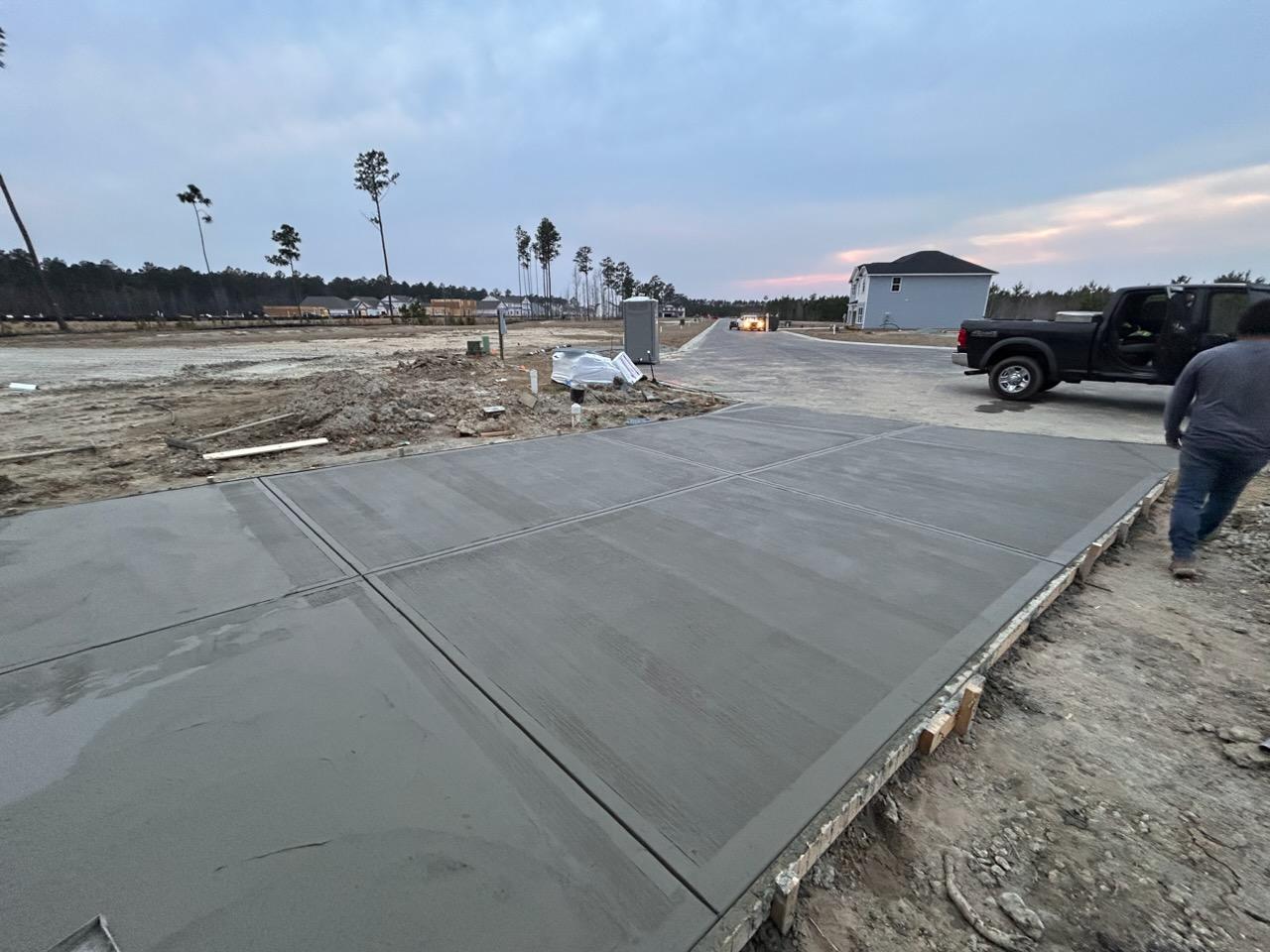
Concrete driveway building in Greenville, NC means removing your old surface, grading and compacting the ground for proper drainage, and pouring a reinforced concrete slab built for eastern North Carolina’s clay soil and heavy rainfall – most residential jobs take one to three days of active work, plus a seven-day curing period before vehicles can use the surface.
A lot of Greenville homeowners call us after noticing cracks that keep spreading or standing water near the garage door after every storm. The flat terrain and clay-heavy Pitt County soil make drainage a real challenge here – it has to be engineered into the driveway design from the start. If you are also thinking about your walkway or front entry, our concrete patio construction team handles those projects as part of a full exterior concrete package.
Every job starts with a free written estimate that covers the full scope – no vague numbers, no surprise charges after the work begins.
How do you know when your driveway needs to be replaced?
Cracks that keep growing
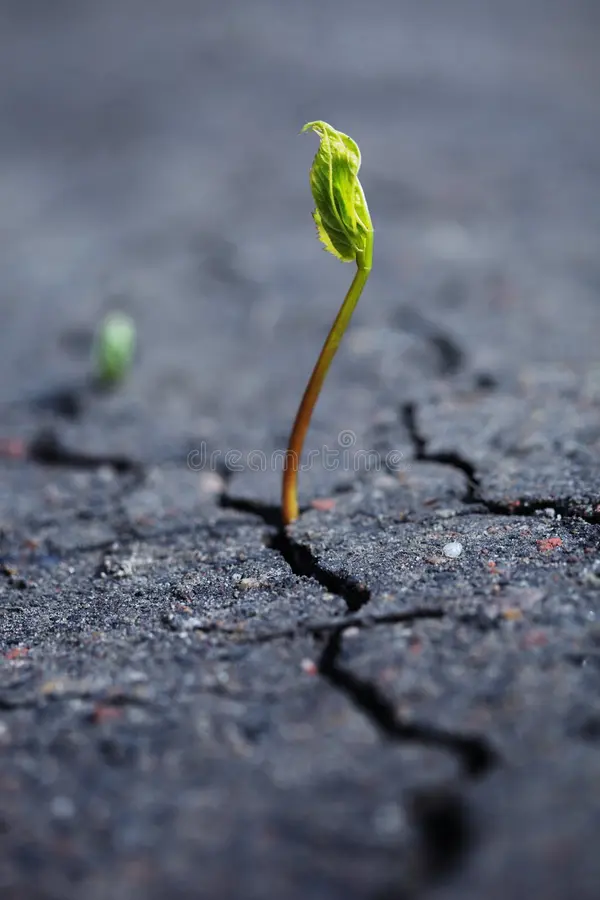
Hairline cracks are normal, but cracks wider than a quarter-inch – or ones that grow each season – mean the slab underneath is shifting. Greenville’s clay soil expands and contracts with every wet and dry cycle, which speeds this process up. Once cracks reach that size, patching rarely holds long-term.
Water pooling after rain
If you see standing water on your driveway after a storm – especially near the garage door – the slab has either settled unevenly or was never graded properly. Given how much rain Greenville gets each year, this will keep getting worse and can push water toward your foundation.
Sections that are sunken or raised
One section sitting noticeably higher or lower than the one next to it means the ground underneath has shifted. This is a safety hazard and a sign the base beneath the slab has been compromised. Leveling compounds are a short-term fix at best.
Surface flaking or crumbling edges
When the top layer starts chipping off or the edges crumble, the concrete has broken down past the point of sealing or patching. Greenville’s summer heat, heavy rain, and occasional winter freezes stress the surface repeatedly – once the surface layer is gone, deterioration accelerates.
STAMPED CONCRETE:
What can stamped concrete do for your Greenville home?
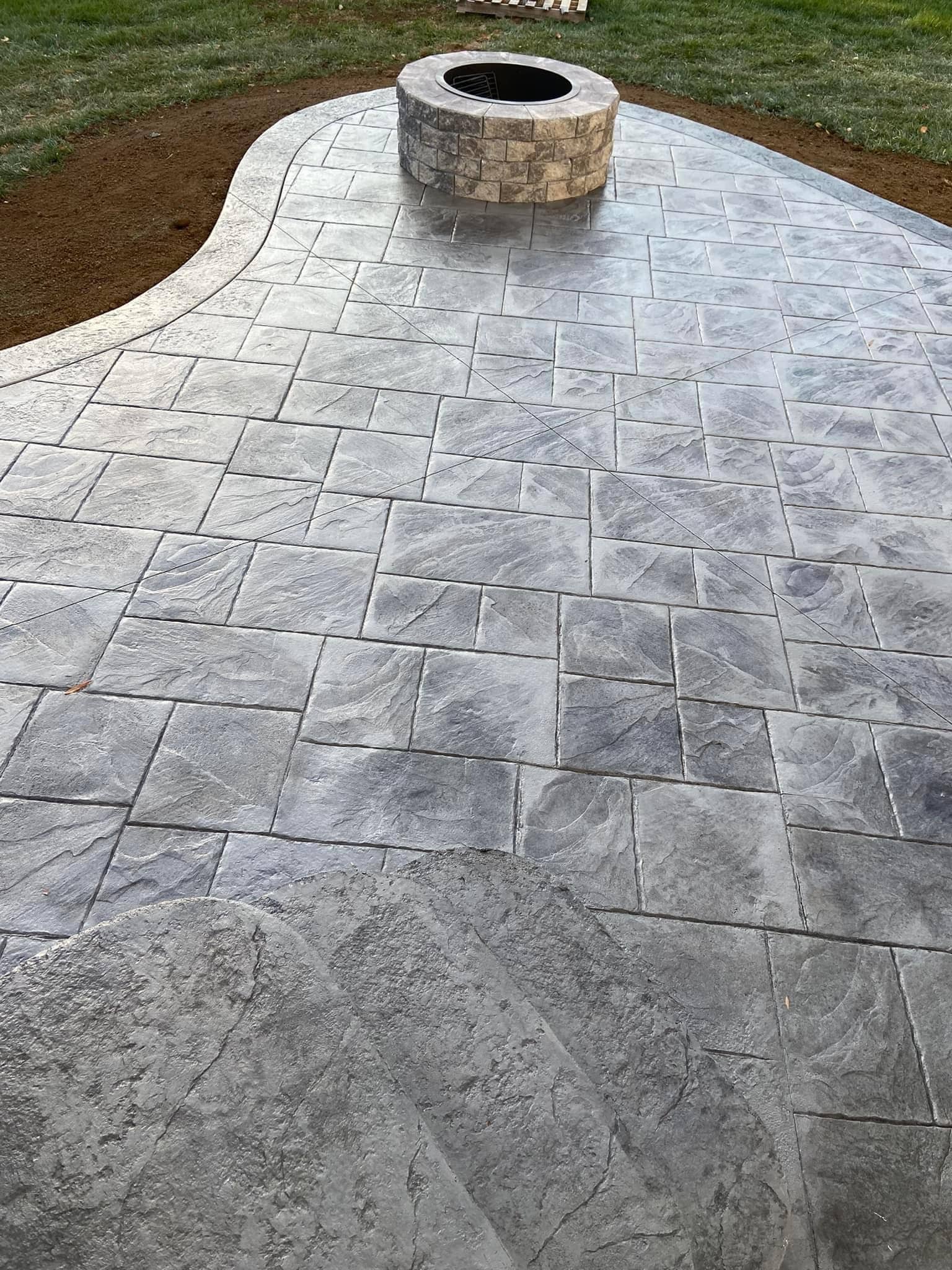
Stamped concrete services in Greenville give you the look of natural stone, brick, or slate at a fraction of the material cost – most residential projects are completed in one to three days of active work, with the surface ready for foot traffic within 48 hours.
If you have been looking at a plain, aging concrete patio and wondering whether it is worth replacing, stamped concrete is worth a serious look. The surface holds up well in Greenville’s climate when it is installed with the right base preparation and sealed on schedule. Many homeowners also use it as a complement to concrete patio construction – combining a structural slab with a decorative stamped finish to get both durability and curb appeal in one project.
The key difference between stamped concrete that looks great for decades and stamped concrete that starts fading within a few years comes down to two things: the base preparation and the sealing schedule. Both are non-negotiable in eastern North Carolina’s humid climate.
How do you know if your concrete surface needs attention?
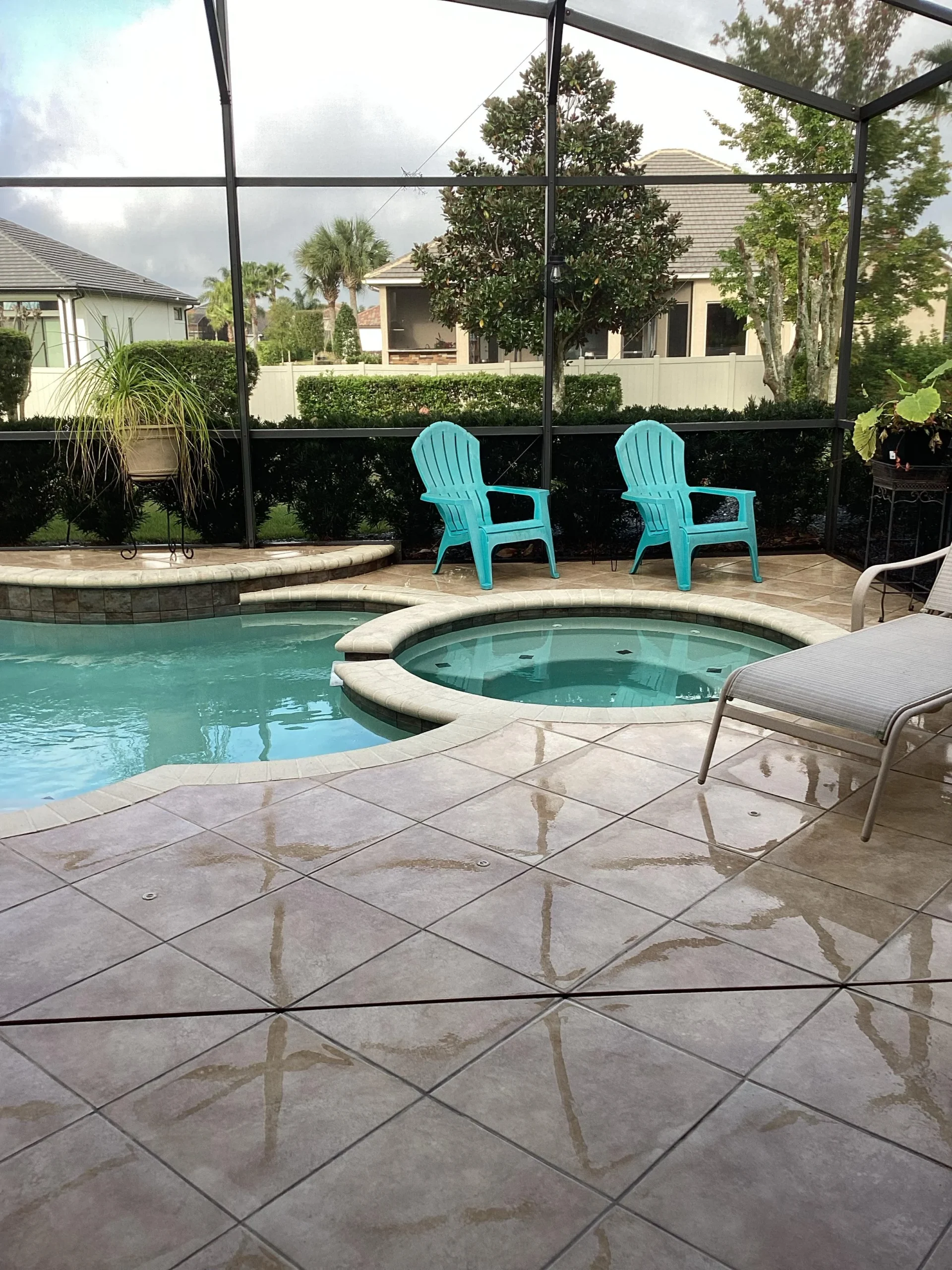
Cracked, stained, or worn surface
Visible cracks running across your patio or driveway, dark stains that won’t wash off, or a surface that looks worn and chalky gray are all signs the concrete has aged past its useful life. In Greenville, the combination of clay soil movement and summer heat tends to age plain concrete faster than homeowners expect. If your slab is more than 15 years old and showing its age, it is worth getting an assessment.
Water pooling near your back door
Greenville’s flat terrain means water has nowhere to go unless your hardscape is graded to direct it. If you notice standing water on or near your patio after a storm, the current surface is not draining properly. Left unaddressed, that pooling water works its way toward your foundation over time – a problem that gets more expensive the longer it sits.
Pool deck is slippery when wet
Plain concrete around a pool can become dangerously slick when wet, especially in Greenville’s long swim season. Stamped concrete with the right texture pattern provides significantly better grip underfoot. If you have noticed family members or guests slipping near the pool edge, that is a practical safety reason – not just an aesthetic one – to consider a stamped surface.
Exterior looks dated after recent updates
If you have recently updated your home’s siding, landscaping, or front entry and the concrete surfaces now look out of place, stamped concrete can bring the whole exterior together. It is one of the few improvements that adds both curb appeal and real resale value, which matters in Greenville’s active real estate market.
CONCRETE PATIOS:
What does concrete patio construction in Greenville actually involve?
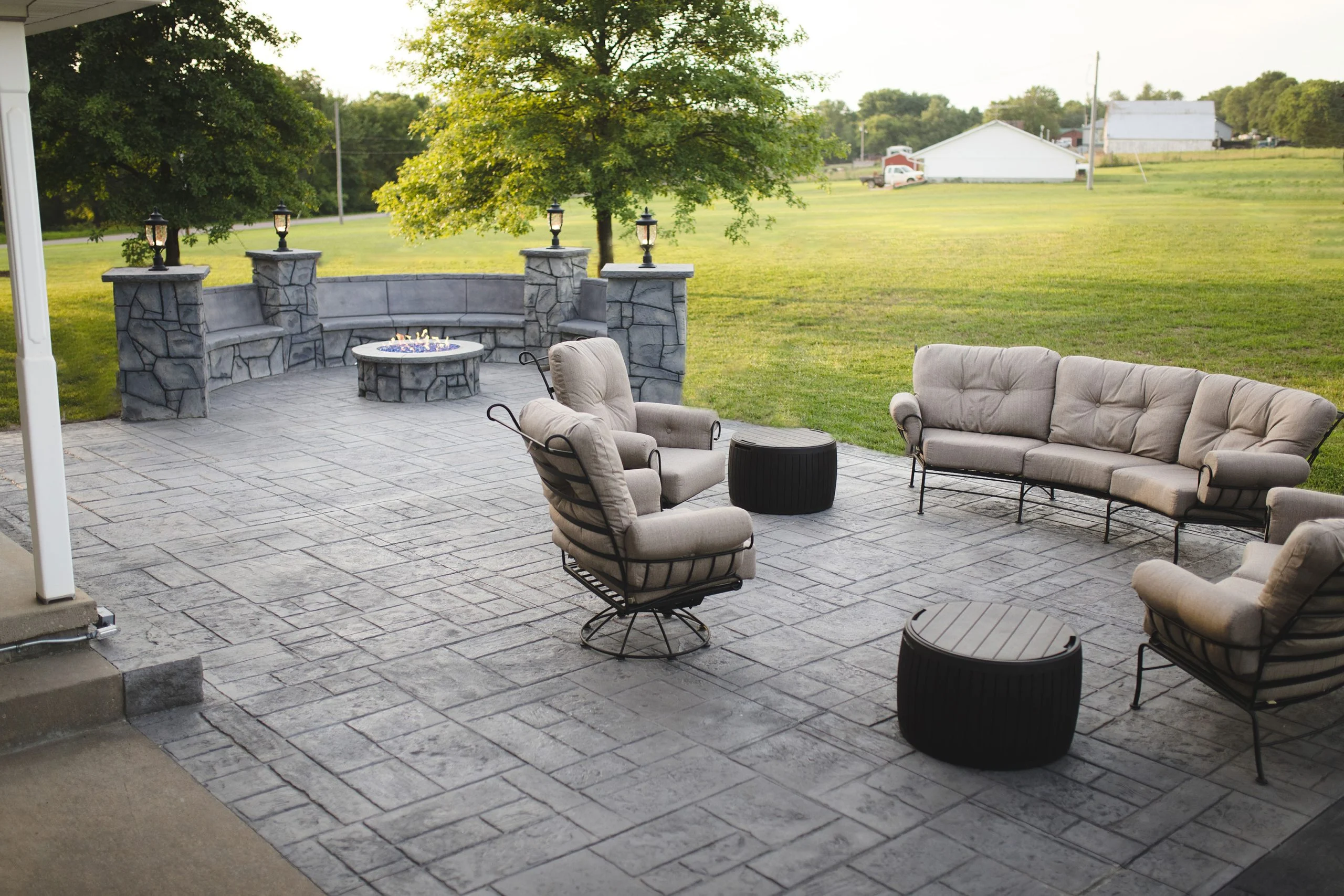
Concrete patio construction in Greenville, NC involves excavating the area, compacting the ground, laying a gravel base for drainage, and pouring a reinforced concrete slab finished to the texture and style you choose – most residential patios take one to three days of active work, with a curing period of at least 24 to 48 hours before light use.
Homeowners in Greenville typically reach out when their backyard stays muddy for days after a storm, their old wood deck is rotting from the humidity, or they want to create a real outdoor living space without the year-round maintenance. Eastern North Carolina gets around 50 to 55 inches of rain per year, and a concrete patio designed with proper slope is one of the most practical upgrades you can make to your property. If you want to go further with your outdoor space, we also offer stamped concrete services that give a patio the look of stone or brick while keeping the durability of a concrete slab.
Every estimate we give is written, itemized, and includes the permit cost – so you know exactly what you are getting before we start.
RETAINING WALLS:
What does building a concrete retaining wall in Greenville actually involve?
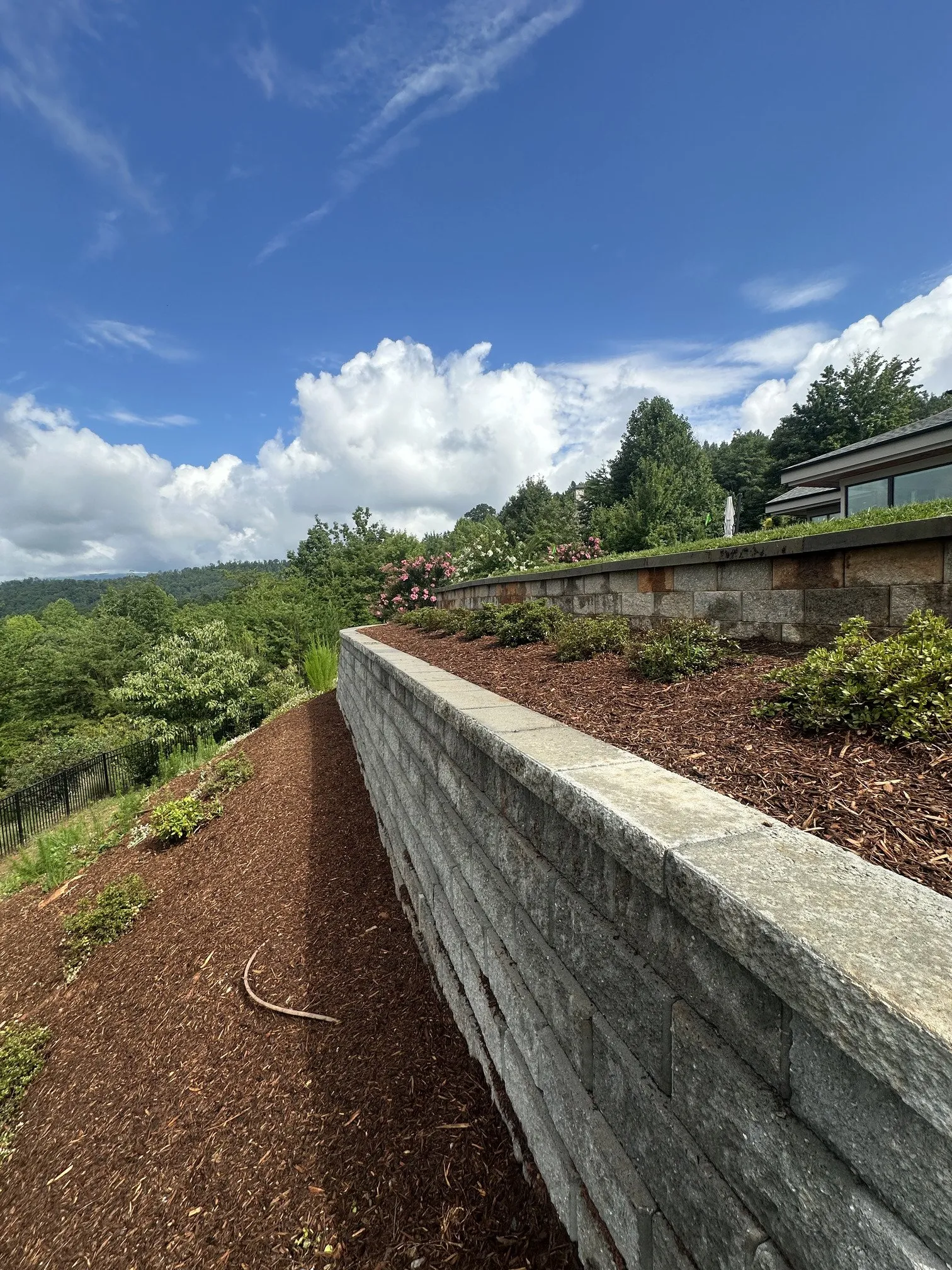
Concrete retaining walls in Greenville, NC hold back sloped soil using a poured concrete wall set on a compacted gravel footing with drainage behind it – most residential jobs take three to five days from excavation to backfill, with a curing period before soil can be placed against the finished wall.
Many Greenville homeowners first notice the problem after a heavy summer storm – soil washing down a slope, water pooling against the foundation, or a yard that is too steep to do anything useful with. Pitt County’s clay-heavy soil and roughly 52 inches of annual rainfall make drainage design the most critical part of any retaining wall project here. Get that wrong and even a solid-looking wall will lean or crack within a few years.
If you are also dealing with stairs or steps on the slope, our concrete steps construction team handles that work in coordination with the wall so everything integrates cleanly. Every project starts with a free written estimate and a real site visit – no guessing from a phone description.
How do you know if your slope or existing wall needs attention?
Soil washing after rain
If bare patches, ruts, or sediment show up at the bottom of a slope after a storm, your soil is actively moving. In Greenville, summer storms can drop two to three inches of rain in an afternoon – that kind of erosion strips a yard quickly and gets worse each season without a wall to hold the slope in place.
Wall leaning or cracking
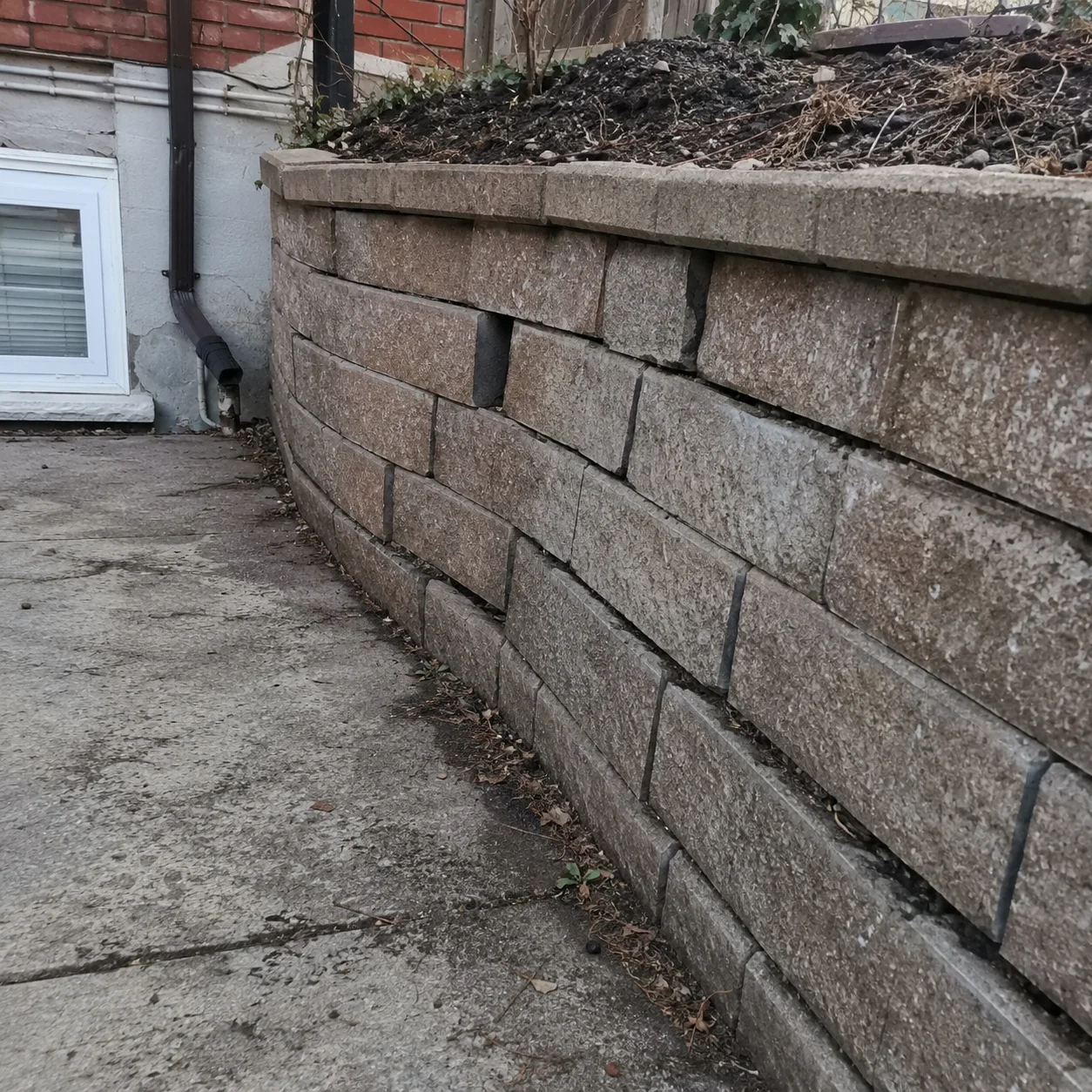
A retaining wall that tilts forward or shows horizontal cracks across its face is under more pressure than it can handle. This is especially common with Greenville’s clay soil, which swells and contracts with the seasons and gradually pushes against whatever is holding it back. A leaning wall will not fix itself.
Water pooling near your foundation
If rainwater consistently collects near your house or garage foundation rather than draining away, a slope or grading problem is often the cause. That standing water works its way into your foundation over time – a much more expensive problem than a retaining wall would have been.
Sloped yard you cannot use
If part of your yard is too steep to mow safely or too uneven for a patio, a retaining wall can turn that wasted slope into a flat, usable space. Many Greenville homeowners discover they have significantly more usable yard once a wall creates a level terrace.
CONCRETE FLOORS:
What does concrete floor installation in Greenville actually involve?
Concrete floor installation in Greenville, NC starts with preparing the ground – grading, compacting the sub-base, and adding a gravel layer before any concrete is poured – then placing and finishing a reinforced slab suited to your space and use. Most residential pours are completed in a single day, with a 24- to 48-hour wait before foot traffic and about a week before vehicles or heavy equipment.
A lot of Greenville homeowners come to us after noticing cracks spreading across a garage floor, puddles forming after rain, or a surface that has started to flake and crumble. Many of those problems trace back to inadequate base preparation when the floor was first poured. Pitt County’s clay-heavy soil holds moisture and moves with the seasons – a floor poured directly onto poorly compacted clay is fighting an uphill battle from day one.
If you are thinking about converting a garage or outbuilding into a workspace, our garage floor concrete service handles those projects with the finish options that work best for drive-on surfaces. Every project starts with a free written estimate based on an actual site visit.
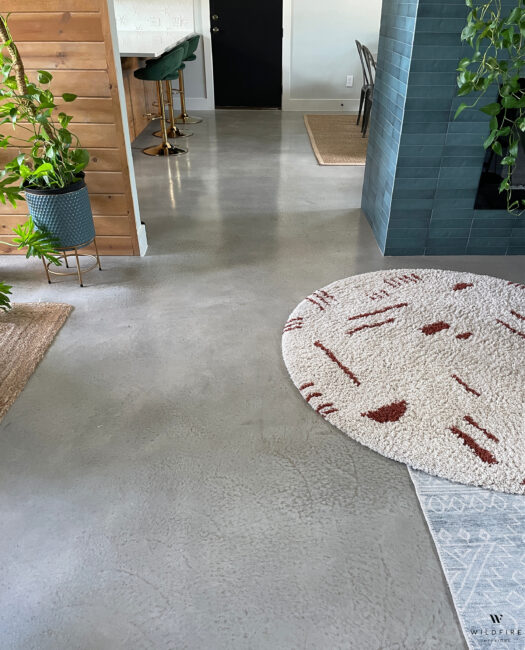
How do you know your concrete floor needs to be replaced?
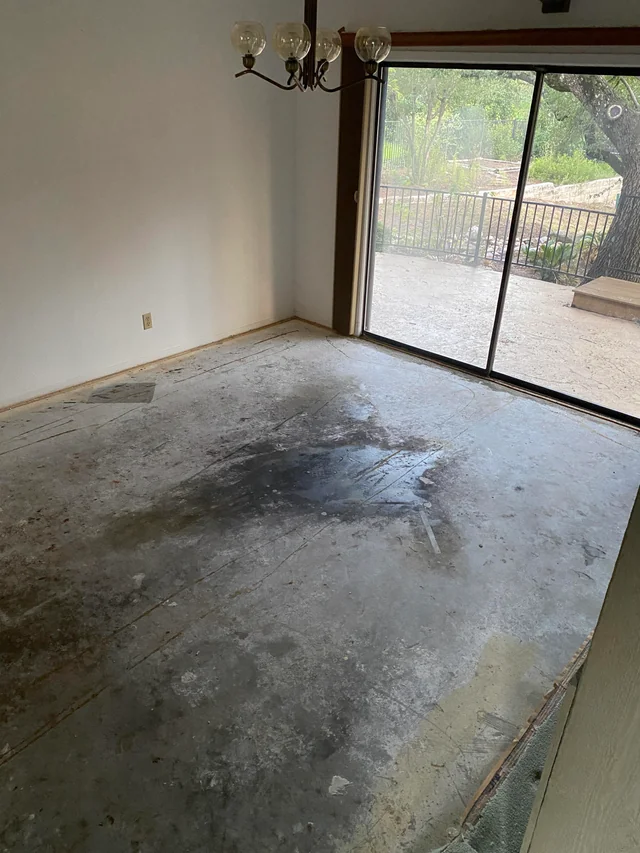
Cracks you can fit a finger into
Hairline cracks are normal, but cracks wide enough to catch your finger – or sections where one side sits higher than the other – mean the slab underneath is shifting. In Greenville’s clay-heavy soil, this kind of movement is common as the ground absorbs and releases moisture. Left alone, those cracks grow wider and can eventually compromise what sits on top of the floor.
Puddles forming after rain or washing
A properly poured concrete floor is slightly sloped so water drains toward an exit. If puddles form in the middle of the space or near the walls after it rains, the slab has settled unevenly or was never graded correctly. In Greenville’s flat terrain, drainage problems like this tend to get worse over time, not better.
Flaking or crumbling surface
When the top layer starts chipping away – called spalling – the surface was either mixed or cured incorrectly, or it has spent years absorbing moisture without protection. You will see rough, chalky patches where the floor used to be smooth. Once spalling starts, it spreads, and patching only goes so far before full replacement is the smarter call.
Floor is 30-plus years old
Many Greenville homes built in the 1970s and 1980s have original concrete floors in garages and utility rooms that have never been replaced. After three decades of Greenville’s humidity, temperature swings, and regular use, those slabs are often past the point where repairs are cost-effective. If your home is from that era and the floor looks rough or uneven, a contractor visit is worth the time.